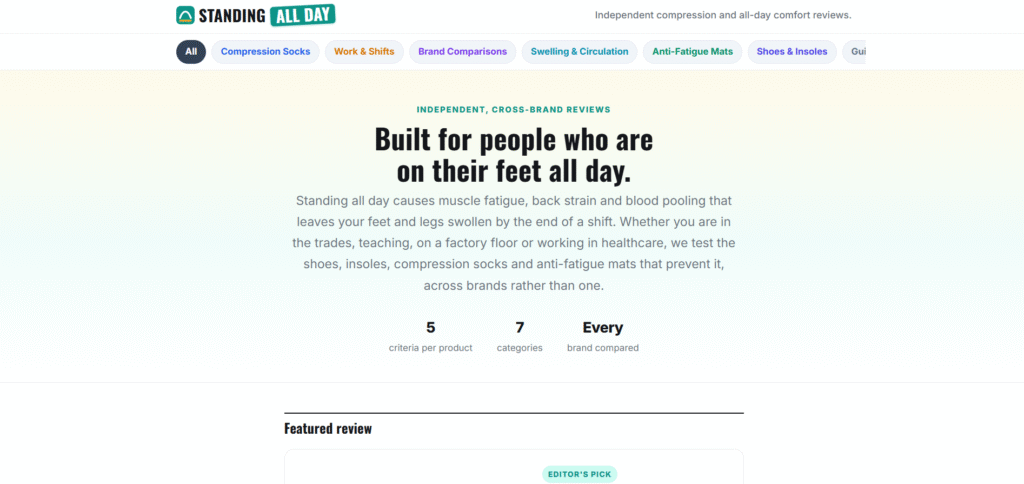
Spending an entire workday on your feet can be physically demanding. For some people, standing for long periods is simply part of their profession. Retail workers, healthcare employees, teachers, restaurant staff, warehouse teams, factory workers, and many other professionals regularly experience long hours of standing and walking.
StandingAllDay.com is a useful focus for anyone interested in practical ways to improve comfort while working on their feet. By paying attention to footwear, posture, movement, work surfaces, and recovery, workers can build better habits for demanding shifts.
Why Standing All Day Requires Preparation
Standing may look effortless, but the body is constantly making small adjustments to maintain balance. Your feet support your weight while your legs, hips, and core help keep you stable.
When this continues for several hours, fatigue can develop. The experience can become even more challenging when the workplace has hard flooring, limited opportunities to sit, or poorly designed equipment.
Preparation can therefore make a long shift more manageable.
Choose the Right Work Shoes
Footwear should be one of the first things you consider if your job requires prolonged standing.
A comfortable work shoe should fit your foot correctly and provide appropriate cushioning and stability. Avoid choosing footwear based solely on appearance. A stylish shoe isn’t necessarily suitable for spending eight or more hours on your feet.
Consider the conditions of your workplace as well. Restaurant employees may need slip-resistant soles, while warehouse workers may require protective footwear. Healthcare and retail workers may prioritize lightweight construction and cushioning.
The best option depends on the demands of your job.
Check Your Shoe Fit Regularly
Your feet can change over time, and footwear can also lose its shape with regular use.
Shoes that once felt comfortable may eventually become too worn or lose their cushioning. Pay attention to signs such as uneven soles, damaged areas, reduced support, or discomfort that wasn’t present previously.
Replacing worn footwear can be an important part of maintaining everyday comfort.
Consider an Anti-Fatigue Mat
If you work at a fixed station, the surface underneath your feet matters.
Hard floors can increase the feeling of fatigue during long periods of stationary standing. An anti-fatigue mat may provide additional cushioning and create a more comfortable standing area.
These mats can be particularly useful in environments such as kitchens, workshops, laboratories, checkout areas, and service counters.
Always make sure a mat is suitable for your workplace and positioned securely.
Keep Moving Throughout the Shift
Standing doesn’t have to mean remaining completely still.
Whenever your job allows, walk around, change your stance, or shift your weight between your feet. Small ankle and leg movements can also provide a welcome change.
Movement is particularly useful for breaking up long periods of stationary standing.
Improve Your Posture
Your posture can influence how your entire body feels after several hours.
Try to avoid continuously leaning to one side or locking your knees. Keep your shoulders relaxed and avoid unnecessary tension in your neck.
A balanced standing position should feel natural rather than forced. Changing positions throughout the day is also important because there is no single posture that should be maintained indefinitely.
Organize Your Workstation
Your environment can either support or work against you.
Place frequently used items within easy reach. If possible, adjust counters and work surfaces to an appropriate height. Repeated bending, twisting, or stretching can make a long shift more tiring.
Even a few ergonomic changes can improve the efficiency and comfort of your daily routine.
Use Your Breaks Wisely
Scheduled breaks provide an opportunity to change position and rest.
If you’ve spent hours standing, sitting down for a few minutes may feel beneficial. If sitting isn’t possible, walking slowly or changing tasks can still provide a different type of movement.
Rather than treating breaks as an interruption, consider them an important part of maintaining a sustainable work routine.
Don’t Forget Hydration
Hydration is another basic consideration during long workdays.
People working in warm environments or performing physically demanding tasks may have greater fluid needs. Keeping water accessible can make it easier to drink regularly.
Individual hydration needs vary, so listen to your body and follow appropriate workplace and health guidance.
Comfortable Socks Matter Too
The right socks can complement comfortable footwear.
Look for socks that fit without creating excessive pressure or bunching. Materials that help manage moisture may be useful in warm workplaces.
Small details such as these can become more important when your feet spend most of the day inside work shoes.
Create an After-Work Recovery Routine
Your workday doesn’t have to determine how your feet feel the next morning. Give yourself time to recover after a long shift.
Changing into comfortable footwear, sitting down, and performing gentle movements can help you transition from work mode to rest.
Some people also prefer to elevate their legs briefly after a demanding day. If a particular activity causes pain, stop and seek appropriate professional advice.
Don’t Ignore Persistent Symptoms
Not every ache is a sign of a serious problem, but persistent or worsening symptoms shouldn’t be ignored.
If discomfort continues despite improving footwear, changing your work habits, and getting adequate rest, consider speaking with a healthcare professional.
Significant swelling, sudden severe pain, numbness, weakness, or other unusual symptoms should receive appropriate medical attention.
Build a Sustainable Routine
The most effective approach isn’t necessarily the most complicated one.
Start with the basics: comfortable footwear, good posture, regular movement, an appropriate work surface, and adequate recovery. Once these habits become part of your routine, you can identify other areas that may need improvement.
This practical approach aligns well with the overall idea behind StandingAllDay.com.
Final Thoughts
Working on your feet can be challenging, but thoughtful preparation can make long shifts more manageable. The right shoes, supportive work surfaces, regular movement, sensible posture, and proper recovery all have a role to play.
StandingAllDay.com is a strong topic for exploring the everyday realities of prolonged standing and the practical strategies people can use to improve workplace comfort.
The goal isn’t simply to get through a long shift. It’s to create healthier and more comfortable habits that can support you throughout your working life.